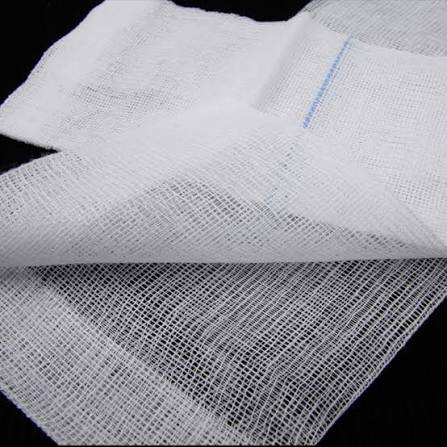

Tubular gauze bandages offer a different approach to dressing retention and support from conventional flat bandages. Their knitted or tubular construction allows the material to fit around a body part, helping hold dressings in position without relying entirely on adhesive products. Because the bandage must stretch and recover appropriately while remaining comfortable to handle, manufacturing consistency is particularly important. Healthcare brands sourcing these products should evaluate fabric construction, sizing, elasticity, finishing, and packaging before approving an OEM supplier.
An OEM Tubular Gauze Bandage Factory may manufacture products to a customer’s specifications and provide private label services for different sizes, lengths, packaging formats, and branding requirements. However, the factory’s ability to produce a consistent tubular structure matters more than the number of customization options it advertises. Buyers should examine the manufacturer’s knitting or fabric-processing capabilities, quality controls, material sourcing, and experience with the intended product category.
Define the intended application and size range
Tubular gauze bandages may be used to retain dressings or provide a covering over selected body areas. The required dimensions and material properties depend on the intended application. A bandage designed for a small area may not be suitable for a larger limb, and a product intended for one type of use should not automatically be assumed appropriate for another.
Prepare a specification that identifies the intended use, material composition, flat width, stretched dimensions where relevant, roll length, and available sizes. If the product will be supplied for a medical application, establish the relevant regulatory and professional requirements before finalizing the design.
Examine knitting and fabric construction
The tubular structure is a defining feature of this product. Buyers should ask how the factory forms the tube and controls its construction during production. Relevant characteristics may include stitch consistency, fabric density, edge finishing, and uniformity along the length of the bandage.
Request samples from representative production runs and inspect them for irregular openings, dropped stitches, uneven edges, loose fibres, or visible defects. If the bandage is expected to stretch and recover within a specified range, ask for appropriate performance data and the test method used to obtain it.
Assess elasticity and fit
A tubular bandage needs to accommodate the intended area without behaving unpredictably during use. Excessive tightness, insufficient stretch, or inconsistent recovery may affect handling and suitability. Buyers should therefore define the expected fit characteristics rather than relying on general descriptions such as flexible or elastic.
Ask the manufacturer how elasticity is measured and whether the results are consistent across different production lots. Test samples in accordance with the intended application and any applicable professional guidance. Product sizing should be clearly explained on the packaging so users can identify an appropriate format.
Confirm material quality
The fabric may be produced from cotton, synthetic fibres, or a specified blend, depending on the product design. Each material has different characteristics in relation to softness, durability, moisture handling, and elasticity. Buyers should request the full composition and confirm that it matches the approved specification.
Ask how incoming yarn or fabric is inspected and whether material sources are qualified. Changes in fibre composition can affect the product’s handling and performance, so substitutions should require documented review and approval. Where skin contact is expected, material suitability should be assessed for the intended conditions.
Review finishing and product cleanliness
Finishing quality influences how the bandage looks and handles when removed from its packaging. The factory should have procedures for controlling loose fibres, cutting accuracy, roll formation, and packaging preparation. Buyers should also ask how finished products are protected from contamination during processing and storage.
The required hygiene controls depend on the product’s intended use and whether it is supplied sterile. A non-sterile tubular bandage should not be described as sterile merely because it is packed in a closed bag. If sterility is required, the factory should provide evidence of validated sterilization and compatible packaging controls.
Check packaging and OEM customization
Private label options may include individual wrapping, different roll lengths, size labels, printed bags, and outer cartons. Packaging should protect the fabric and make the size and product identity easy to recognize. Buyers should confirm pack quantities, carton dimensions, and labeling requirements for the destination market.
Ask how artwork is approved and how packaging changes are recorded. Product descriptions and claims should be accurate and should not suggest medical performance beyond what the product’s design and evidence support.
Assess manufacturing and regulatory documentation
Review relevant quality certificates, product specifications, inspection records, and batch identification procedures. Verify that certificates apply to the actual factory and relevant activities. Ask how defects are recorded and how corrective actions are managed.
The regulatory status of a tubular bandage depends on its intended purpose and market. Clarify the documentation and registration responsibilities of the factory, brand owner, and importer. Do not assume that one manufacturer’s existing approval automatically covers every private label variation.
Consider capacity and repeat-order consistency
Discuss production capacity, minimum order quantities, lead times, material availability, and export experience. Ask how the factory manages demand changes and whether it can maintain the approved construction when order volumes increase.
The best OEM partner is one that can reproduce the agreed tubular structure, maintain consistent sizing and material quality, and support the buyer with dependable records and communication. A careful selection process helps create a bandage range that is easier to manage and more predictable across repeat orders.