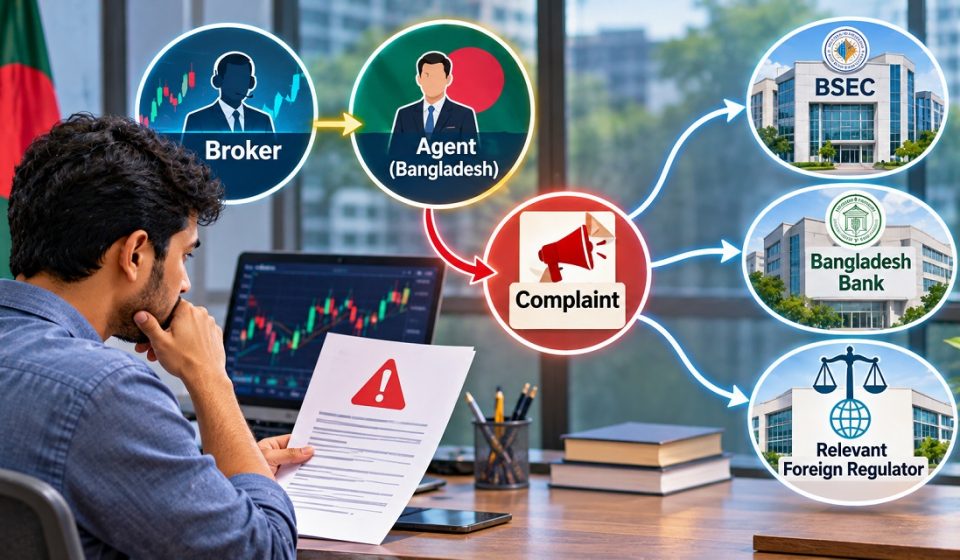

The company named on a trading agreement can be different from the name on a Bangladeshi promoter’s social media page. A local contact might explain how to open an account with a CFD broker, pass along deposit instructions or answer questions in Bangla. If a withdrawal stalls, the client may naturally return to that contact. Who handles the complaint depends on which party controlled the withdrawal, who received the money and what role the promoter played.
For a dispute over an order, an account restriction or a refused withdrawal, the account agreement and statements can identify the legal entity responsible for the account. A brokerage group may advertise under one name while operating through companies in several jurisdictions. Where the firm claims to be regulated, the relevant regulator’s public register can help confirm the company’s name and whether its permissions cover the service in question. A formal complaint about the account usually goes to that firm’s complaints team first. If the response leaves the issue unresolved, an overseas ombudsman or other dispute resolution service may be available, depending on its rules about the firm, the activity and the complainant.
What the local promoter did can raise a separate issue. An agent may have introduced the client and left the firm to handle every payment. In other cases, a promoter may have collected taka directly or claimed authority to approve withdrawals. If the facts suggest fraud, such as a promoter impersonating a licensed firm or diverting a deposit, the client can report the suspected conduct to Bangladesh Police. The Bangladesh Securities and Exchange Commission also has a complaint channel for investors dealing with capital-market intermediaries within its remit. Whether that channel applies depends on the intermediary and the activity involved.
The payment record can point to a different complaint route. If the issue concerns how a Bangladeshi bank or mobile financial services provider handled a transfer, the customer can raise it with that institution and escalate an unresolved complaint to Bangladesh Bank’s Customer Interest Protection Centre. In a hypothetical case, a customer could have a receipt showing that taka reached a local wallet while the trading account still showed no deposit. The payment provider can address what happened to the transfer through its system. The recipient’s identity and any instructions issued by the promoter help establish who was supposed to credit the trading account.
If the CFD broker and the local promoter each send the client back to the other, the client can check which company is named in the account agreement. The statements and transaction references can help identify who received the payments. Screenshots of the original promotion and messages about deposits or withdrawals can show what the agent promised and whose name the agent used. For an order dispute, the order number and timestamps give the firm something specific to investigate. For an allegation involving a local recipient, the name on a bank or wallet receipt can be more useful than a screenshot of the platform balance.
The same failed withdrawal can lead to more than one complaint. The brokerage firm may need to explain why it blocked the request, while a local payment provider may need to trace a transfer and police may examine the promoter’s conduct. A dated record of who gave each instruction, who received the funds and who last confirmed the account balance helps each organisation assess the part it can act on.