
Many industrial process fluids contain more than one type of material, such as solids suspended in liquid or two immiscible liquids with different densities. Separating these components efficiently can improve product quality, simplify downstream processing, and support continuous production.
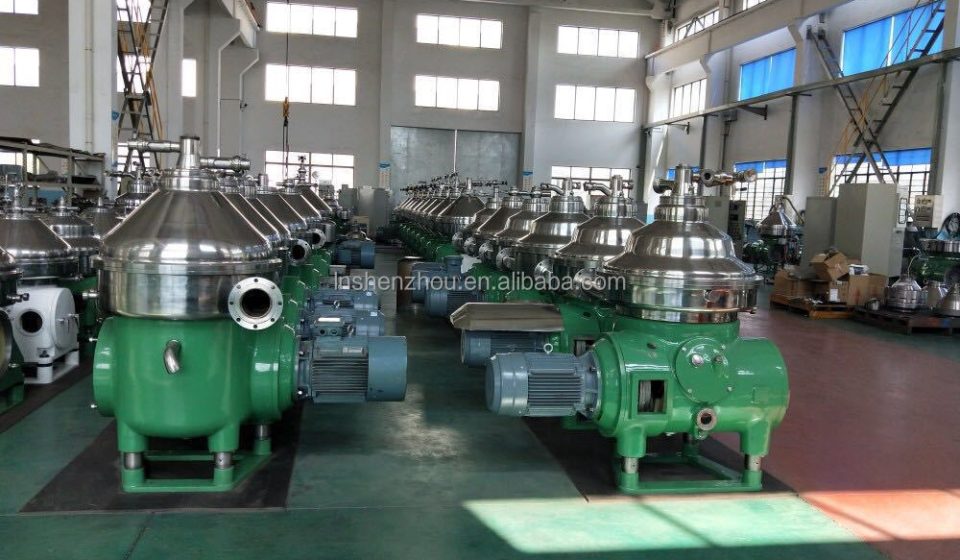
A Disc Centrifuge can separate multiple phases by using centrifugal force to accelerate the natural movement of materials with different densities. Its rotating bowl and closely spaced disc stack create conditions that allow separated components to move toward different areas of the machine.
Understanding Multiple-Phase Separation
A process fluid may contain a combination of light liquid, heavy liquid, and suspended solids. Under normal gravity, these components separate relatively slowly because their density differences produce limited settling forces.
Inside a centrifuge, rotational acceleration greatly increases the force acting on the components. Heavier materials move toward the outer region of the bowl, while lighter liquids move closer to the central axis.
The Role of Density Differences
Density is the fundamental property that allows different phases to separate. When two liquids have different densities, centrifugal force causes the heavier phase to move outward and the lighter phase inward.
The greater the density difference, the easier the phases generally are to distinguish and separate. When the densities are very similar, operating conditions and equipment configuration become more critical.
How the Disc Stack Enhances Separation
The disc stack contains multiple closely spaced conical discs. These create thin flow channels through which the process fluid travels during separation.
As liquid moves between the discs, particles and droplets have a shorter migration distance. Denser particles move toward the outer bowl area, while separated liquid phases travel toward their respective outlet regions.
This design provides a large effective separation area without requiring a very large machine.
Separating Solids From Liquids
When solids are present in a multiphase feed, the densest material typically migrates toward the bowl wall. Fine particles can then accumulate in the solids-holding area.
Depending on the centrifuge design, accumulated solids may be removed manually during maintenance or through an automated discharge mechanism. Proper solids management helps prevent excessive buildup from interfering with normal separation.
Separating Two Liquid Phases
In a two-liquid system, the centrifuge establishes separate flow paths for the lighter and heavier phases. The position of the liquid-liquid interface depends on factors such as phase density, flow rate, and the design of the liquid outlets.
Maintaining a stable interface is important because excessive changes in feed conditions can affect the purity and recovery of the separated phases.
Separating Three Phases
Some process fluids contain three distinct components: a heavy liquid, a light liquid, and solids. A suitable three-phase centrifugal separation process can direct each component toward a different outlet or collection area.
For example, a feed containing oil, water, and suspended solids can be processed so that the solids move toward the bowl’s peripheral region while the two liquid phases migrate toward separate outlets.
The exact separation capability depends on the properties of the feed and the centrifuge configuration.
Effect of Feed Flow Rate
Flow rate affects residence time within the effective separation zone. Excessive flow can reduce the time available for particles and droplets to migrate, potentially lowering separation efficiency.
A suitable flow rate should therefore balance required throughput with the desired purity and recovery of each separated phase.
Influence of Viscosity
Viscosity affects how easily particles and liquid droplets move through the process fluid. Higher viscosity can slow migration and make fine-particle or liquid-liquid separation more challenging.
Temperature may influence viscosity for many process fluids, so stable temperature control can be an important part of maintaining consistent multiphase separation.
Bowl Speed and Centrifugal Force
Bowl speed determines the centrifugal acceleration available for separation. Increasing speed can improve the separation of smaller particles or droplets, but operating speed must remain within the equipment’s design limits.
Stable rotation is equally important. Excessive vibration or mechanical imbalance can affect equipment reliability and should be investigated promptly.
Maintaining Separation Quality
Consistent multiphase separation requires control over several variables, including:
- Feed composition
- Flow rate
- Temperature
- Viscosity
- Density differences
- Solids concentration
- Bowl speed
- Discharge settings
Monitoring these factors helps operators respond to changes in feed properties before they significantly affect the separation result.
Industrial Applications
Multiphase centrifugal separation can be useful in industries such as food processing, edible oil production, chemical manufacturing, wastewater treatment, and fuel processing.
The specific application determines the required bowl configuration, materials, operating conditions, and discharge arrangement. Equipment should always be selected according to the physical and chemical properties of the process fluid.
Equipment Selection Considerations
When selecting a centrifuge for multiphase separation, users should evaluate the expected flow rate, density differences, particle size, solids loading, viscosity, temperature, and desired phase purity.
Shenzhou Machinery is one supplier of centrifugal separation equipment, but technical specifications should be compared carefully with the actual process requirements before equipment is selected.
Conclusion
Disc centrifuges can separate multiple phases by combining high centrifugal force with a carefully designed internal flow path. The disc stack improves separation by creating a large effective area, while the rotating bowl directs solids and liquids according to their density.
Successful three-phase or two-phase separation depends on matching equipment design and operating conditions to the characteristics of the feed. Proper control of flow rate, viscosity, temperature, bowl speed, and solids discharge can help maintain stable and efficient separation.