
Rising operational costs have become one of the biggest challenges for modern businesses. Electricity expenses, in particular, continue to increase as companies expand operations and rely more on energy-intensive systems. As a result, many organizations are turning to solar energy as a strategic investment that reduces costs while improving long-term financial stability.
In Thailand’s competitive business environment, solar adoption is growing quickly due to strong sunlight availability and high daytime energy consumption. Many companies are now considering solutions such as โซลาร์เซลล์สำหรับธุรกิจ to improve efficiency, reduce operational expenses, and strengthen long-term return on investment (ROI).
Table of Contents
ToggleWhy Solar Energy Is Ideal for Businesses
Businesses typically consume large amounts of electricity during daytime hours, which aligns perfectly with solar energy production. This makes commercial operations one of the most efficient use cases for solar systems.
Key advantages for businesses include:
- High daytime energy usage matches solar generation
- Reduced monthly operating costs
- Greater financial predictability
- Improved corporate sustainability performance
Because energy costs are a recurring expense, reducing them directly improves profit margins over time.
How Commercial Solar Systems Work
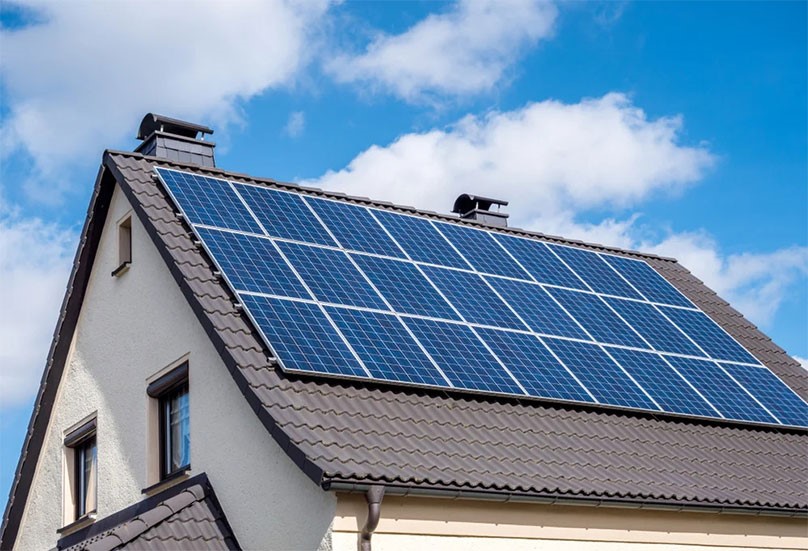
A commercial solar system generates electricity using rooftop or ground-mounted solar panels. The electricity is then used directly in business operations, reducing dependency on the grid.
A typical system includes:
- High-capacity solar panels
- Commercial-grade inverters
- Mounting structures for large-scale installation
- Electrical distribution systems
- Energy monitoring and management tools
These components work together to ensure stable and efficient power generation throughout business hours.
Types of Solar Solutions for Businesses
Different businesses require different solar system configurations depending on their size, industry, and energy usage patterns.
Common commercial solar solutions include:
- Rooftop solar systems for warehouses and offices
- Ground-mounted systems for large industrial spaces
- Hybrid systems with battery storage
- Grid-tied systems for cost optimization
Each solution is designed to maximize energy efficiency while minimizing operational costs.
ROI Benefits of Solar for Businesses
One of the most important reasons businesses invest in solar energy is the strong return on investment (ROI). While the initial installation cost may be significant, long-term savings often outweigh the upfront expense.
Key ROI benefits include:
- Lower electricity bills over time
- Faster payback period for high-energy users
- Reduced exposure to rising utility prices
- Increased asset value of commercial properties
In many cases, businesses begin to see financial returns within a few years, making solar one of the most cost-effective infrastructure investments.
Why Solar Is Considered the Best Long-Term Energy Strategy
Among various energy-saving solutions, solar power is widely considered one of the most reliable long-term strategies for businesses. Unlike temporary cost-cutting measures, solar systems continuously generate electricity for decades.
Many experts view well-designed systems as the best energy solution for commercial use because they provide:
- 20–25 years of stable energy production
- Predictable operational cost reduction
- Scalability for business expansion
- Strong ESG and sustainability impact
This combination of financial and environmental benefits makes solar a strategic asset for modern companies.
Key Factors That Affect Commercial Solar Performance
The effectiveness of a solar system depends on multiple technical and environmental factors. Proper planning ensures maximum efficiency and ROI.
Important factors include:
- System size relative to energy demand
- Roof or land availability
- Sunlight exposure and shading conditions
- Equipment quality and efficiency
- Installation design and engineering accuracy
A well-optimized system ensures businesses get the highest possible return from their investment.
Challenges in Commercial Solar Adoption
While solar energy offers many advantages, businesses must consider certain challenges before installation.
Common challenges include:
- High initial capital investment
- Structural limitations of buildings
- Integration with existing electrical systems
- Energy consumption variability
- Planning for future expansion needs
These challenges can be effectively managed through professional system design and consultation.
Importance of Professional Installation
Commercial solar systems require expert engineering to ensure efficiency, safety, and long-term performance. Poor installation can lead to energy loss and reduced ROI.
Experienced providers of โซลาร์เซลล์สำหรับธุรกิจ typically offer:
- Detailed energy audits and feasibility studies
- Customized system design for each business type
- High-quality industrial-grade equipment
- Safe installation following international standards
- Long-term monitoring and maintenance support
Professional execution ensures that the system performs at its maximum potential throughout its lifespan.
Conclusion
Solar energy is becoming an essential investment for modern businesses looking to reduce operational costs and improve long-term profitability. With rising electricity prices and increasing sustainability demands, commercial solar systems offer a powerful solution for financial and environmental efficiency.
By investing in well-designed systems and working with experienced providers of โซลาร์เซลล์สำหรับธุรกิจ, businesses can achieve strong ROI, stable energy savings, and long-term competitive advantage. As the energy landscape continues to evolve, solar power stands out as one of the most effective and future-ready solutions for commercial growth.